Japan’s California Is Real. Look What They Did to This Abandoned House
Sep 23, 2026The second-home test nobody can do from a listing
It's easy to know whether you like a Japanese house
You look at the photos. You walk through it. You start imagining what you'd do with the kitchen, the garden, the deck.
It's much harder to know whether you actually want the life that comes with it.
That's what interested me about Chris and Jenny's house in Isumi.
They bought an older property near the Pacific coast, put a lot of work into it, and turned it into a completely different home. But the renovation wasn't really the final test.
They then stayed there for about 10 days.
And that's when things got interesting.
But the house can only tell you so much
A second home is easy to romanticize.
In Chris and Jenny's case, you've got the Pacific coast, an old Japanese house, a big renovation, a deck, dogs and morning walks to the beach. It's a pretty good fantasy.
But there's a big difference between enjoying that picture for a weekend and waking up there on an ordinary Tuesday.
Do you actually like the area?
Do you enjoy being there when you're not sightseeing?
Would you still want to walk that beach after you've done it twenty times?
Do you like the neighborhood?
Do you find yourself wanting to go back?
Those questions are harder to answer from a property listing.
And they're especially important when you're buying a second home in Japan from overseas. You may spend months looking at houses in places you've only visited once or twice.
Chris and Jenny had already solved the house problem
The original property needed serious work.
The renovation touched the roof, floors, walls, kitchen, wet areas, exterior and more. When Chris and Jenny came back for the first time, the difference was dramatic.
So they had answered one question:
Could they turn this old house into the home they wanted?
Yes.
But there was another question waiting.
Did they actually want to live there?
That's why I was more interested in what happened after the renovation than I was in the renovation itself.
Ten days later, the house looked different again.
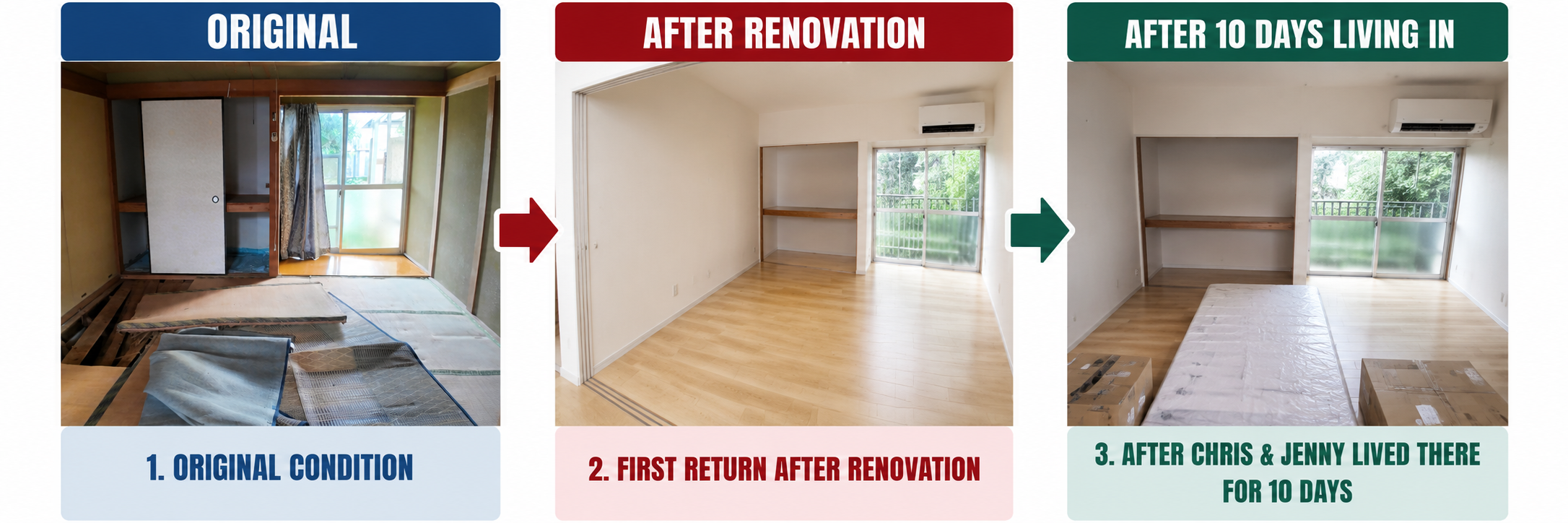
There was a lawn being used. A deck. Furniture. Coffee. Their dogs. All the little signs that a place has stopped being a project and started becoming someone's home.
And then we got the answer.
“Sad to go back home. Like really sad to go back home.”
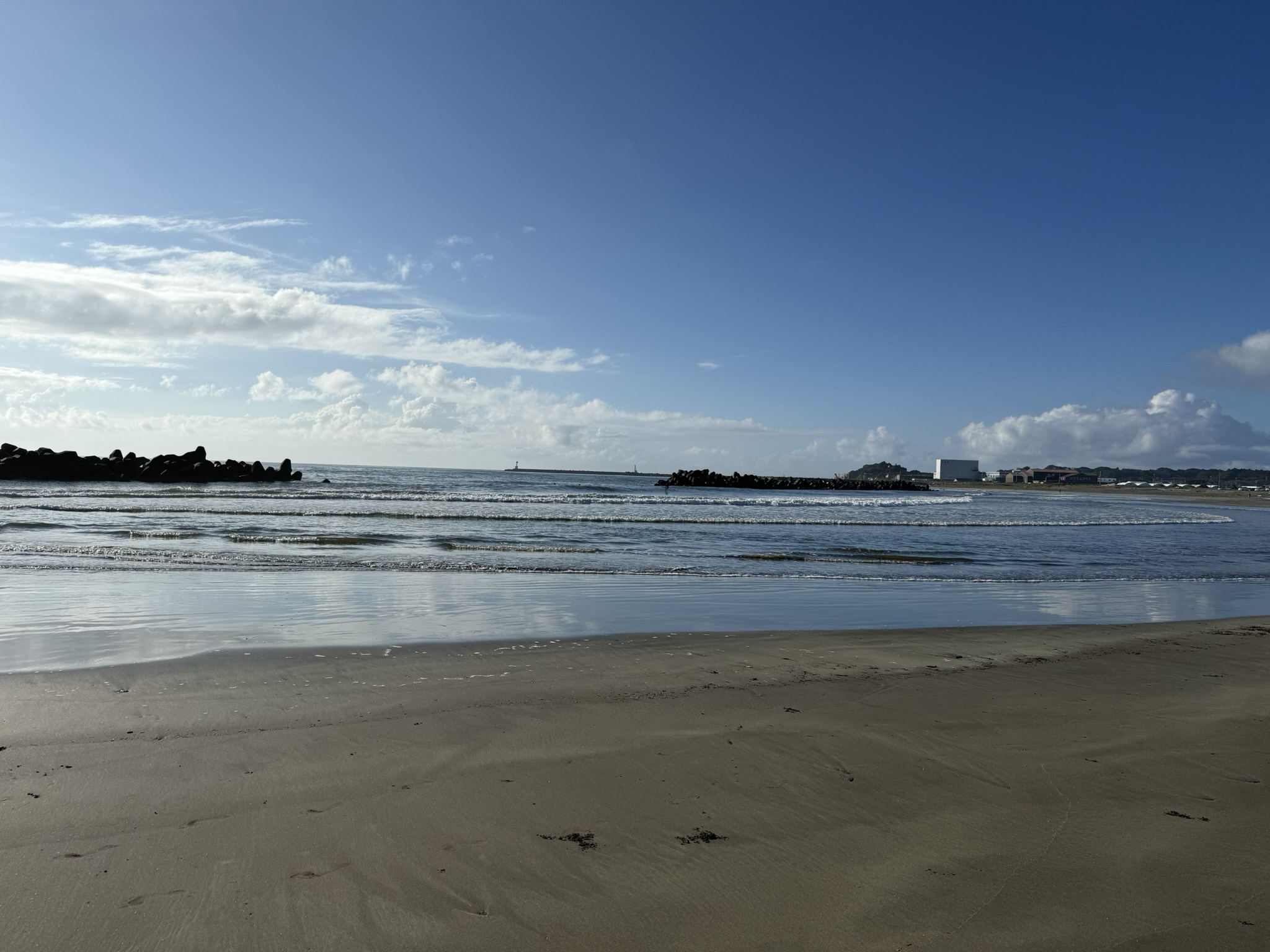
They talked about walking to the beach every morning and evening, the surfers, their dogs, their neighbors.
And one comment stood out to me:
“We love this community.”
That's different from saying, “We love the house.”
The house is something they changed.
They couldn't renovate the neighborhood. They couldn't change the coastline or the rhythm of life in Isumi.
Those were the things they had to decide whether they liked as they were.
This is the part I'd pay attention to
If you're considering a second home in Japan, I'd separate two questions that are easy to combine:
Can I make this property work?
and
Do I actually want to keep coming back to this place?
They're not the same question.
A cheap house can be renovated. A bad layout can sometimes be changed. An ugly kitchen can be replaced.
The location is harder.
So before getting too attached to a property, I'd spend some time thinking about the ordinary version of life there.
Where would you shop? What would you do on a rainy day? Would you enjoy the neighborhood after the novelty wore off? Could you see yourself coming back when you didn't have a holiday planned?
You don't need a magic number of days to answer those questions. Chris and Jenny's 10-day stay isn't a rule.
But actually living somewhere for a while gives you information that a listing never will.
And there's another reason I think this story is useful.
They paid a little over ¥7 million / $44,000 for the house. That's a surprisingly low number, but it wasn't the cost of the finished home. Their renovation was roughly three times the purchase price, around $130K-ish based on their discussion.
So even the financial side tells a similar story.
The purchase was only the beginning of the decision.
They were spending money to create a home in a place they hoped they would actually want to return to.
That's what I'd keep in mind when looking at Japanese property.
You're not only choosing a building. You're choosing the place you'll keep coming back to.
If you want to see the Isumi house and the area for yourself, you can watch the full episode here.