
Restoring the House My Tenant Trashed in Japan
Sep 09, 2026Fixing it isn’t the whole job
The house is only part of the work
We tend to think of renovating an old house as the hard part.
You find the problems. You make a plan. You bring in the contractors. You tear things out, rebuild them, paint, repair, and eventually you get to enjoy the transformation.
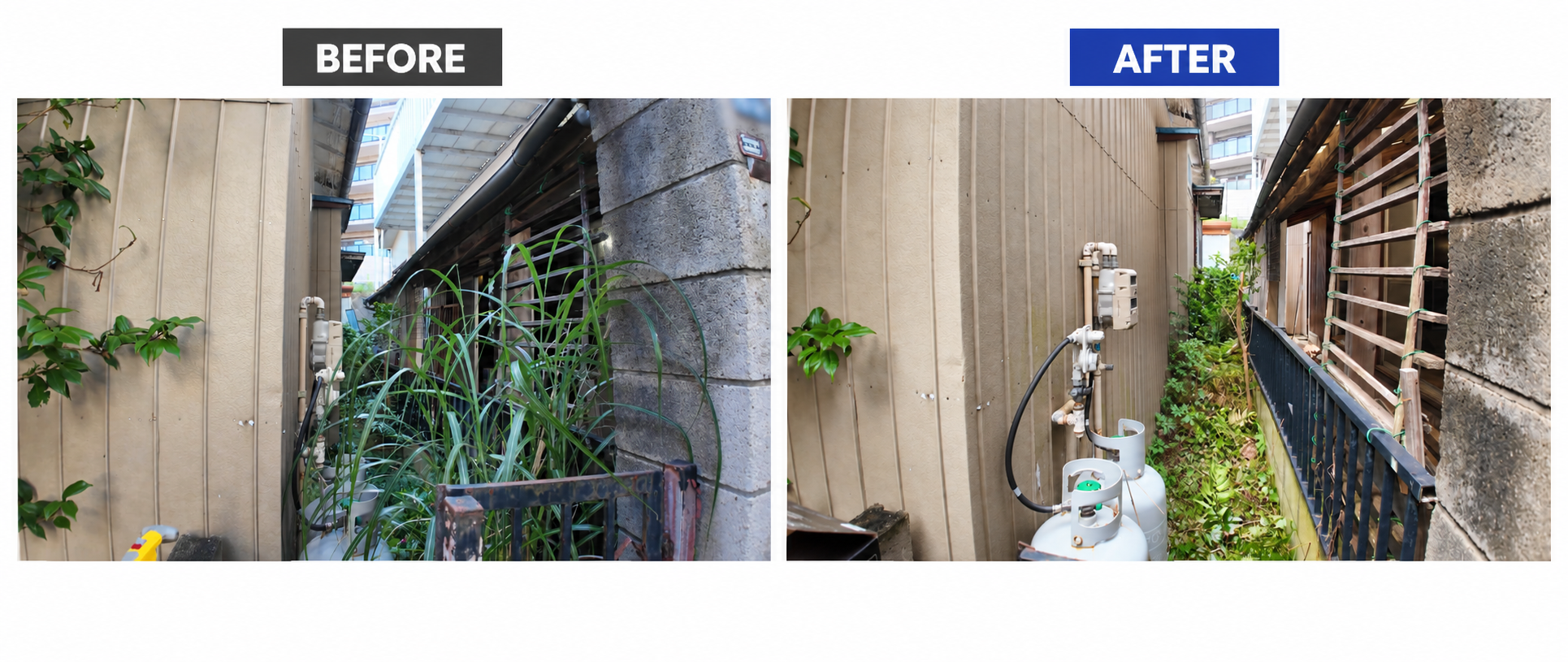
But while my contractor, Shiozawa-san, and his team were working inside my old rental property, I found myself outside cutting weeds.
It wasn't exactly the glamorous part of the renovation.
And that's when I started thinking about the difference between renovating a house and taking responsibility for one.
The renovation has a scope. Someone can say, "We're going to redo this floor, repair these shoji, repaint this room."
The property itself doesn't really care about the scope.
There are still things that need attention.
In my case, one side of the property had become seriously overgrown. There was an abandoned house next door, vegetation was getting wild, and there were plenty of mosquitoes to make the job even more enjoyable.
I checked with the person helping to look after that neighboring area before I started, then decided to see what I could do myself.
I bought a grass trimmer for about ¥8,000 / $51 and some extra batteries for another ¥7,000 / $44.
And then, about ten minutes into the job, the trimmer stopped.
I spent a little time trying to figure out what had happened before realizing the battery was dead.
And, of course, I had forgotten the charger.
So that plan went out the window.
I started cutting things manually instead.
At one point I was looking at one of the larger branches thinking, "I need a chainsaw."
Eventually, after about an hour and a half to two hours, one side was looking substantially better.
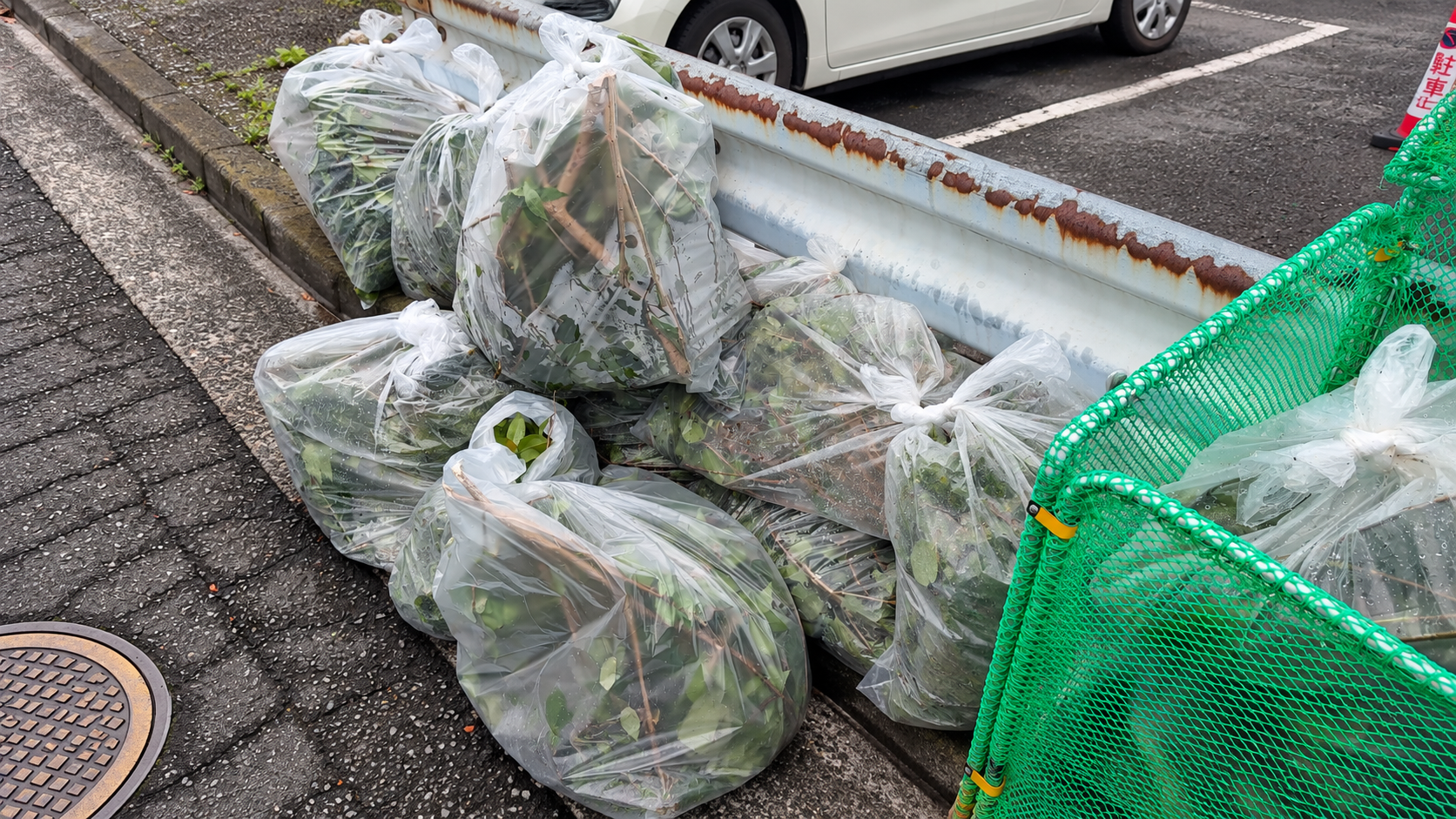
Nine 90-liter bags of vegetation and debris later, there was a pretty satisfying pile of evidence that something had actually happened.
But even then, we weren't done. Other sides still needed attention, and there was more weed prevention to deal with.
That's the part of an old-house project that doesn't show up very well in a property listing.
You can see the floor area.
You can see the number of rooms.
You can see the price.
You might even get some photographs of the garden.
What you don't really see is everything that will eventually need somebody's attention.
That doesn't mean the owner has to do all of it
That's not the point.
A contractor can handle the renovation. A local person can handle maintenance. A property manager or steward can deal with things when the owner isn't nearby. Different jobs can have different people responsible for them.
But somebody has to be paying attention.
That's particularly worth thinking about if you're buying a house in Japan from overseas.
When you're evaluating a property, it's natural to concentrate on the purchase price and the renovation budget. I'd add another question:
Once this house is mine, who is going to notice when it needs something?
Because the good news with this property is that things really are changing.
Inside, the main first-floor room is being rebuilt. The damaged shoji that were absolutely ripped up are being prepared for new paper. Workers are continuing with the finishes and painting.
And one of the biggest changes isn't something you can see at all.
The bad smell is gone.
The house used to smell like a property that had been badly neglected. Now it mostly smells like paint.
I'll take that.
The A/C works, too. The studio isn't finished, but it's starting to feel like somewhere I might actually want to spend time.
That's what bringing an old house back seems to look like in practice.
Some days it's contractors rebuilding a room.
Some days it's nine bags of weeds.
Sometimes you have the right tool. Sometimes you forget the charger.
And sometimes you just have to figure out what needs doing next.
If you're looking at an old Japanese house, I'd keep that in mind. Don't only ask what it will take to buy the property or renovate it. Ask who will take care of it afterward.
That question can be just as important, especially when you're going to be living somewhere else.
If you'd like to see the actual progress on the house, you can watch the latest episode below.