
How He Bought, Renovated and Furnished a House Near Tokyo, All From America
Sep 06, 2026Your time is part of the cost of a Japanese house
When people calculate whether they can afford a house in Japan, they usually think about the purchase price first, then renovation, taxes, and maybe furniture.
There's another cost that's harder to put on a spreadsheet:
Your time.
And if you live outside Japan, your time can get expensive very quickly.
I was thinking about this while looking at Kurt's house in Niiza. He bought the property for ¥27.9 million / $178,000 and then had to turn an unfinished house into somewhere his family could actually use.
That meant renovation. Then furniture. Measurements. Design decisions. Finding the right suppliers. Making sure furniture would physically fit through the doors and up the stairs. Receiving deliveries. Coordinating installation.
None of those jobs is particularly complicated on its own.
But when you're sitting in another country, you can't just drive over and solve the problem.
The purchase is the easy part to put on a spreadsheet
Kurt's buying process had clear steps and costs. Once the purchase was complete, the nature of the work changed.
A local homeowner can visit the house after work. They can measure a doorway themselves. They can go to a furniture store, talk to a supplier, receive a delivery, or take a look when something doesn't go according to plan.
An overseas owner may have to arrange a flight to do the same thing.
Or find someone locally who can do it.
Or spend hours coordinating it remotely.
That doesn't mean you should outsource everything. Some people genuinely enjoy managing these projects, and some will have the local knowledge and time to do a lot themselves.
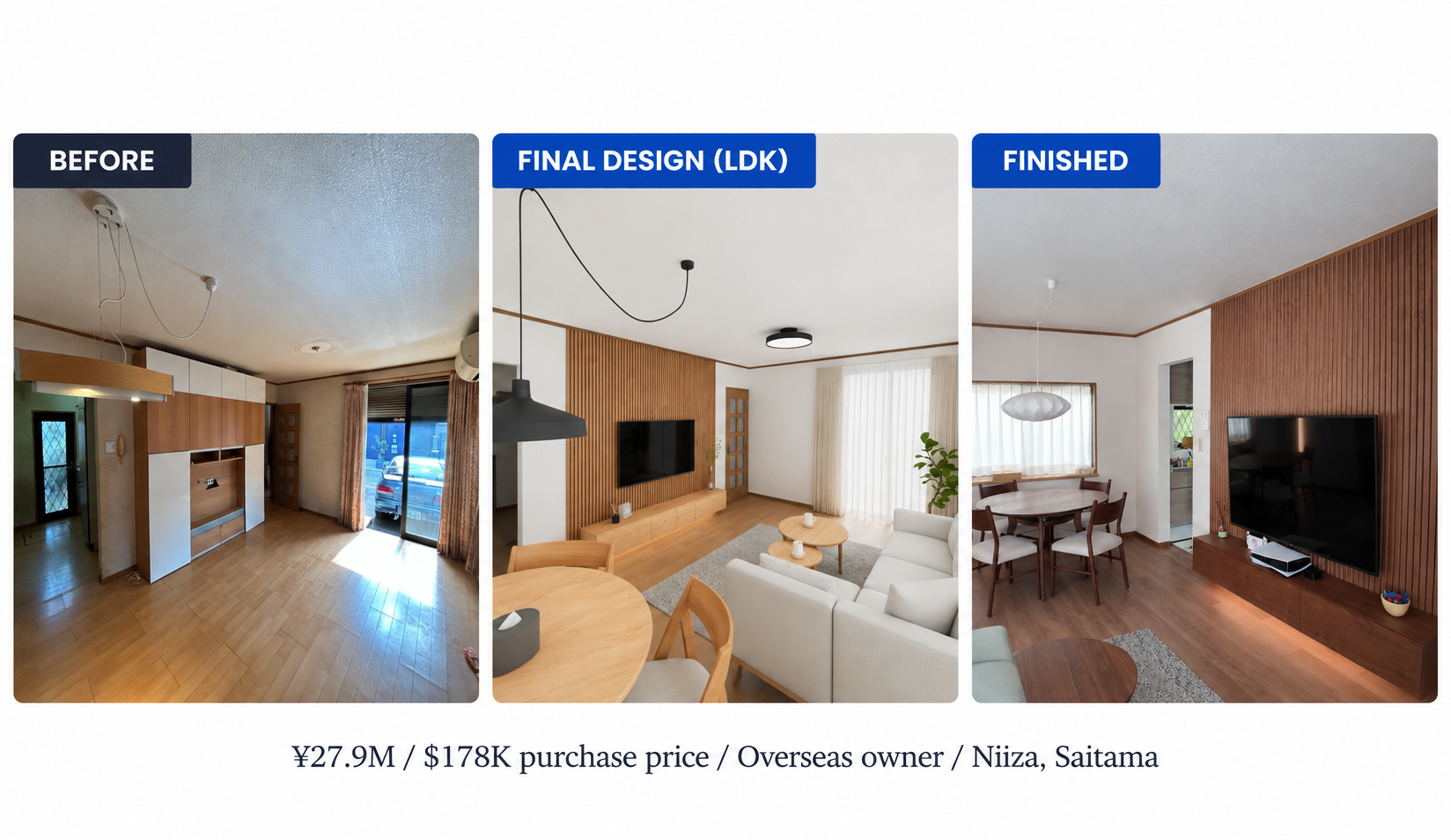
But I think overseas buyers sometimes look too closely at the purchase price and not enough at the amount of work that comes afterward.
Small problems become coordination problems
One of the things I liked about Kurt's project was how ordinary some of the problems were.
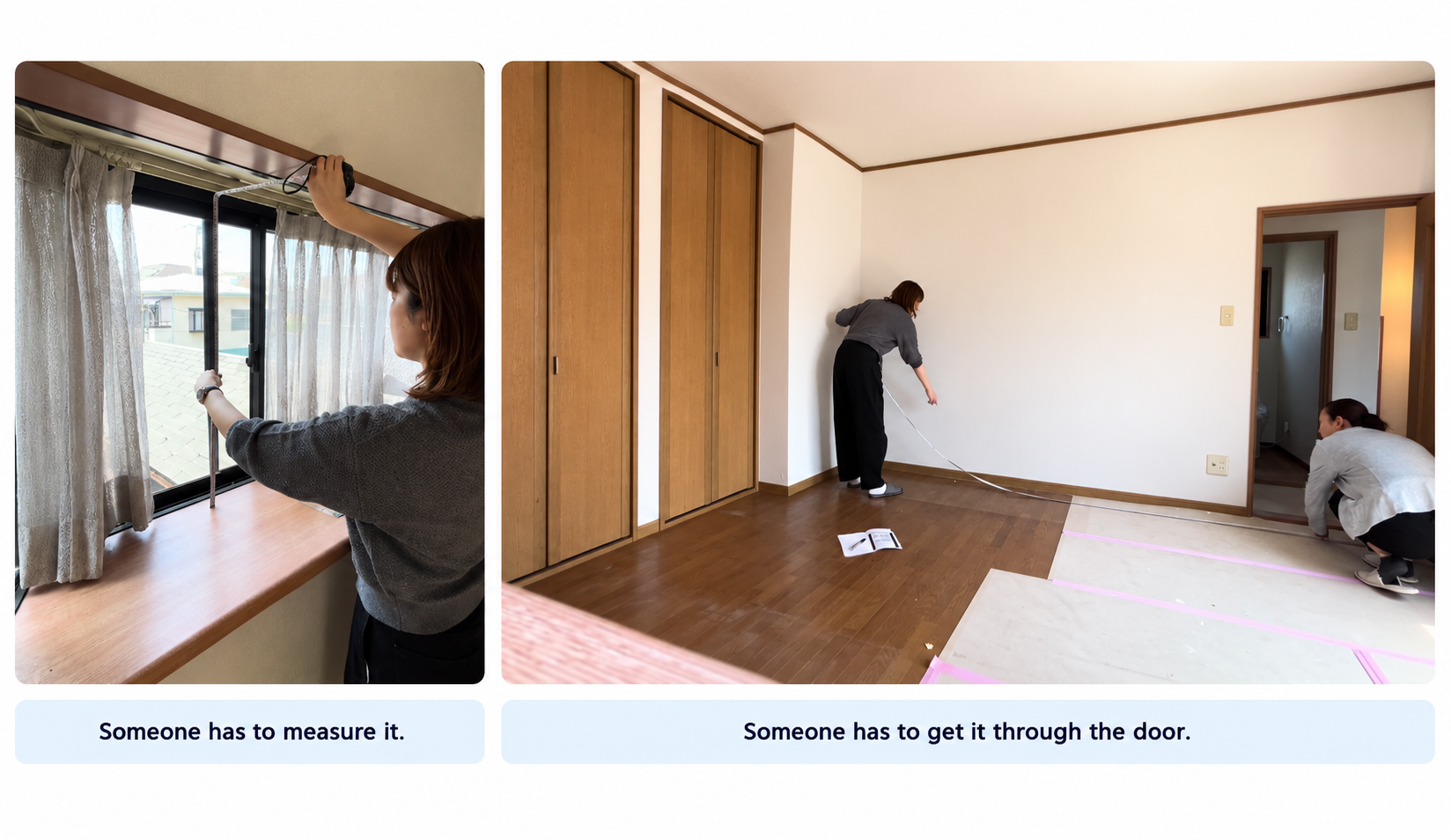
For starters, Coordy didn't just measure the rooms. They looked at windows, stairs and access routes because furniture has to get into the house before it can sit in the room.
That sounds obvious.
But imagine buying a large sofa from another country without being there to check the route from the front door to the living room.
The sofa can fit perfectly in the room and still be completely useless if it can't get through the entrance.
The same thing happened with the design process. Kurt and his wife weren't simply handed a finished house and told to accept it. They reviewed proposals, chose colors and finishes, gave feedback, and revised the designs remotely.
They kept control of the decisions.
Someone else handled much of the physical coordination.
I think that's a useful distinction.
Delegating doesn't have to mean giving up control.
So what is your time worth?
This is the question I'd ask before buying a house in Japan from overseas.
Not just:
Can I afford this property?
Also:
How much of this am I realistically prepared to manage myself?
A few things are worth considering:
- How often can you actually visit Japan?
- Do you know local contractors, suppliers, or furniture companies?
- Can you communicate comfortably with people handling the work?
- Can you be there when something needs to be measured, delivered, or checked?
- If something goes wrong, who is going to deal with it?
- And perhaps most importantly, do you actually want to spend your time doing all of this?
There's no universal answer.
Kurt put it pretty simply: “Delegate what you can.”
For him, that made sense because he lives overseas, didn't have the local supplier knowledge, and couldn't be at the property to handle all the small physical tasks himself.
Someone else might make a different calculation.
That's fine.
The point is to make the calculation in the first place.
A Japanese house doesn't need to become a second job just because you bought it from another country. But before you buy one, it helps to understand what the job actually looks like after the purchase.
We filmed Kurt's entire project, from the unfinished house and the first designs through to the finished home.
If you want to see what that process looked like in practice, the episode is here:
[Watch Buy, Renovate, and Furnish a House in Japan with Zero Effort]
And if you're still at the beginning of the process, AkiyaHub’s free Japan Market Match Snapshot can show you what your budget can realistically get you in Japan.
Sometimes the first useful question isn't “How do I buy this house?”
It's “Is this the kind of house I can realistically own from where I live?”