Japan’s Sumo House Is Real. The Price Doesn’t Make Sense.
Sep 27, 2026What Do You Do With a House Like This?
There are some Japanese houses where the more you learn about them, the more they make sense.
And then you have this one.
When I first walked into this huge house in rural Ibaraki, my reaction was basically: why is everything so big?
Then we learned that more than 20 sumo wrestlers could stay here during training camps.
Suddenly, the house started making a lot more sense.
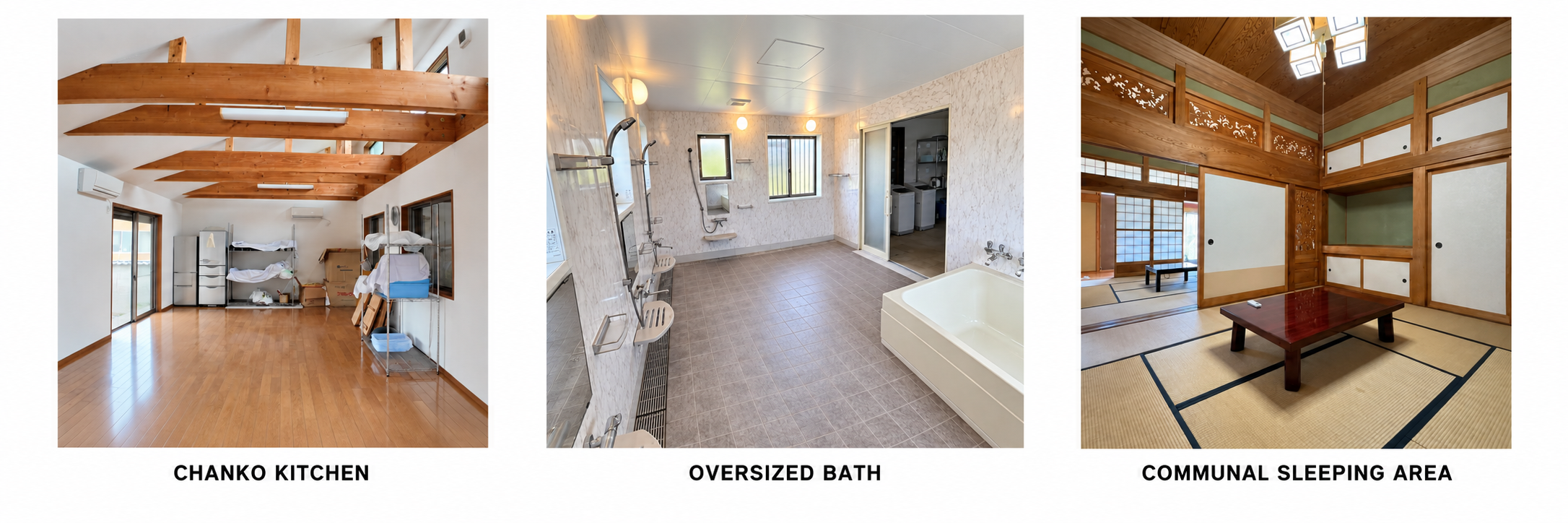
The enormous kitchen wasn't oversized for the sake of it. It was used to prepare chanko for a large group.
The bath wasn't just a very large Japanese bath. It had multiple shower stations because a lot of very large people needed to use it.
There were communal sleeping areas, separate rooms upstairs for higher-ranked wrestlers, and a room for the oyakata.
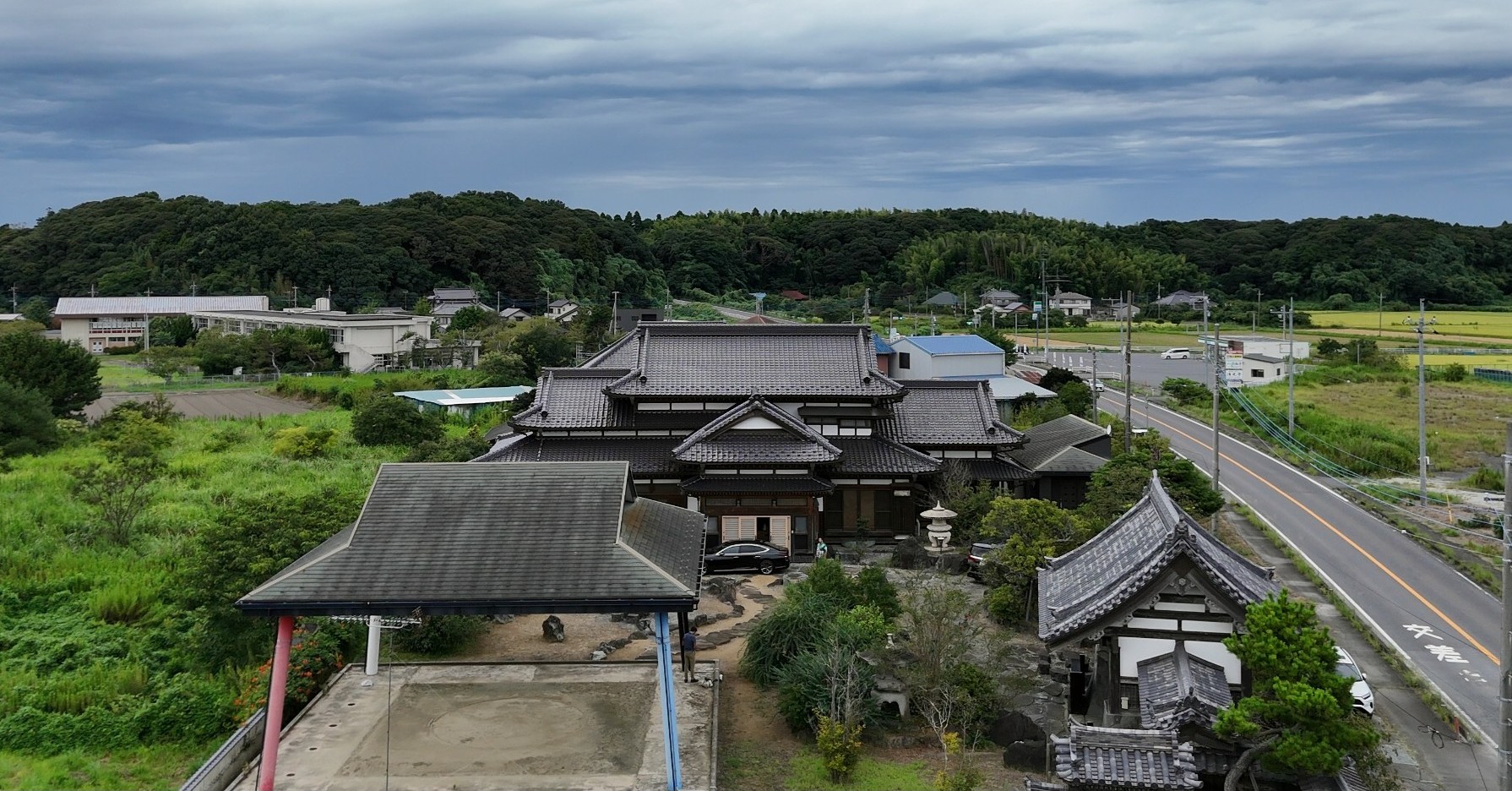
And outside, there is an actual dohyo.
None of these things are random.
They are all pieces of the same system.
That's also what makes the house difficult
The interesting thing about this property isn't simply that it has a dohyo.
It's that the dohyo explains the house.
The same is true of the chanko room, the bath, the sleeping arrangements and even the sheer amount of space.
This was a privately owned house used for sumo training camps, not a conventional sumo stable. It was built around a very specific way of using the property.
And that raises a question I think is useful whenever you're looking at an unusual Japanese property:
What are you actually going to do with it?
A normal 8LDK house with 2,517 sqm of land gives you a lot of options on paper.
This one is also an 8LDK house with 2,517 sqm of land. But once you add a private dohyo, a giant bath, communal cooking facilities and rooms designed around group life, the numbers don't tell you very much by themselves.
You need to understand the logic of the property.
And then you need to decide whether that logic can work for you.
A house can have too much personality
This is where I think unusual properties get interesting.
The things that make a place special can also make it harder to adapt.
You could look at the chanko room and think, "I'll never need this."
You could look at the dohyo and think, "What am I supposed to do with that?"
Or you could ask a different question:
Is there a way to make those things useful again?
That's what made Konishiki's reaction to the property particularly interesting.
Someone who understands sumo immediately sees possibilities in spaces that might look completely impractical to everyone else.
He talked about people actually experiencing sumo training, cooking chanko, staying here and getting a sense of what that kind of life is like. He even floated the name "Super Sumo Academy?"
That's an idea, not a finished project. But I like the question behind it.
Maybe the answer to a highly specific property isn't to remove everything that makes it unusual.
Maybe the better answer is to find a new use that gives those unusual spaces a reason to exist.
What I'd ask before buying something like this
If you're looking at an unusual Japanese property, I'd spend less time asking whether you simply like it and more time asking:
- Why was this property built this way?
- Which parts of it are genuinely useful to me?
- What am I going to do with the parts that aren't?
- Am I buying a flexible house, or am I taking on an existing system that needs a new purpose?
The more specialized the property, the more important those questions become.
With this house, the answers are unusually visible.
It has a huge kitchen because people ate here.
It has a huge bath because large groups stayed here.
It has a dohyo because people trained here.
The original owners had already solved a very specific problem.
The next owner just has to figure out what problem they want the house to solve.
If you'd like to take a closer look at the property itself, we also broke down the story behind the house in our article, Why Does This Japanese House Have a Sumo Ring?
If you'd like to see the property itself, we filmed the whole visit, including the chanko room, giant bath, dohyo and Konishiki's ideas for what might come next: