Japan’s Maldives is Real. The House Prices Don’t Make Sense.
Sep 16, 2026Cheap and affordable are not the same thing
Imagine finding a house in Japan for ¥0.
It's close to the water. There's a train station nearby. There's a lot of land. And some of the interior actually looks pretty decent.
Sounds like an easy decision, right?
I'm not so sure.
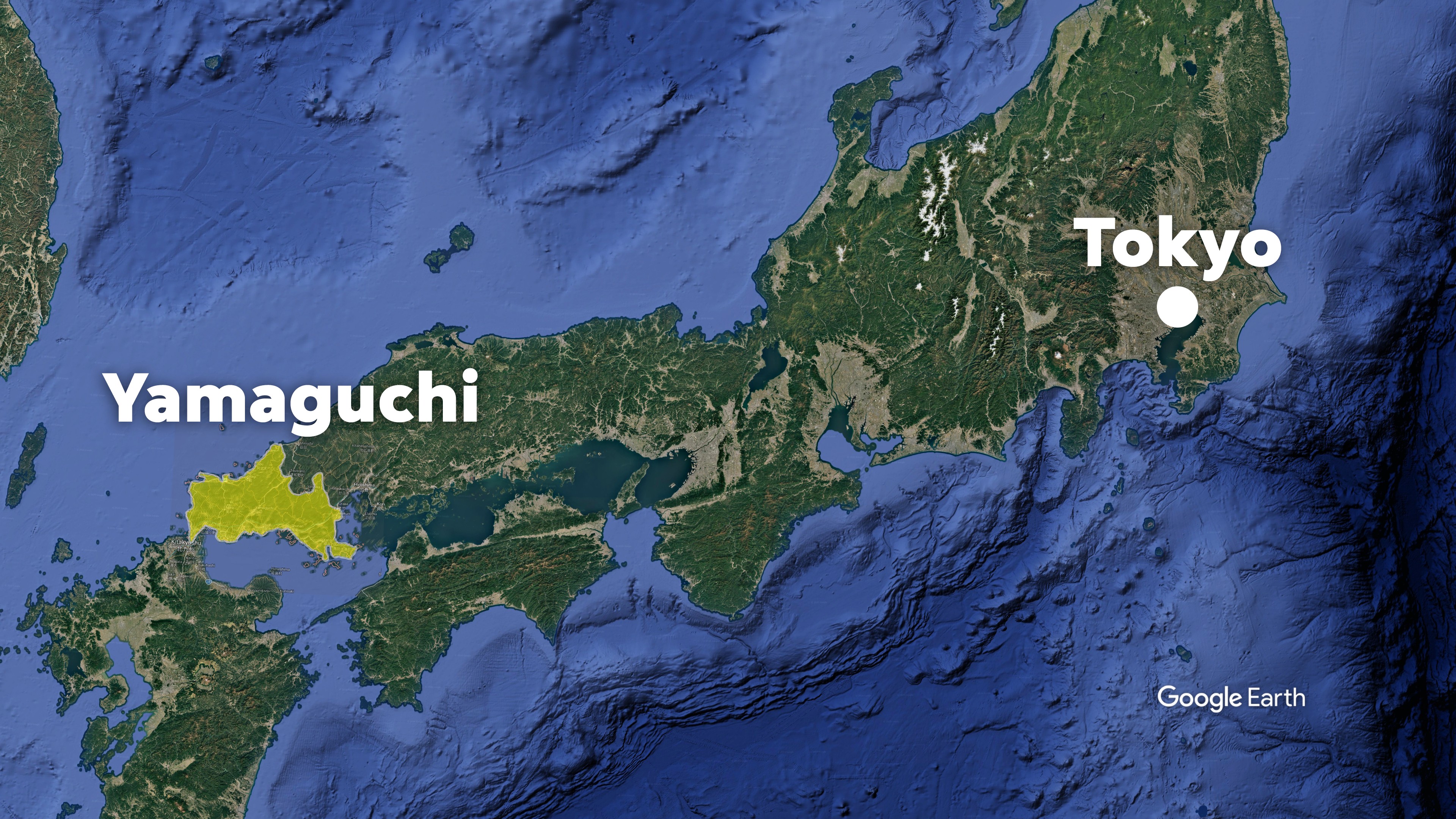
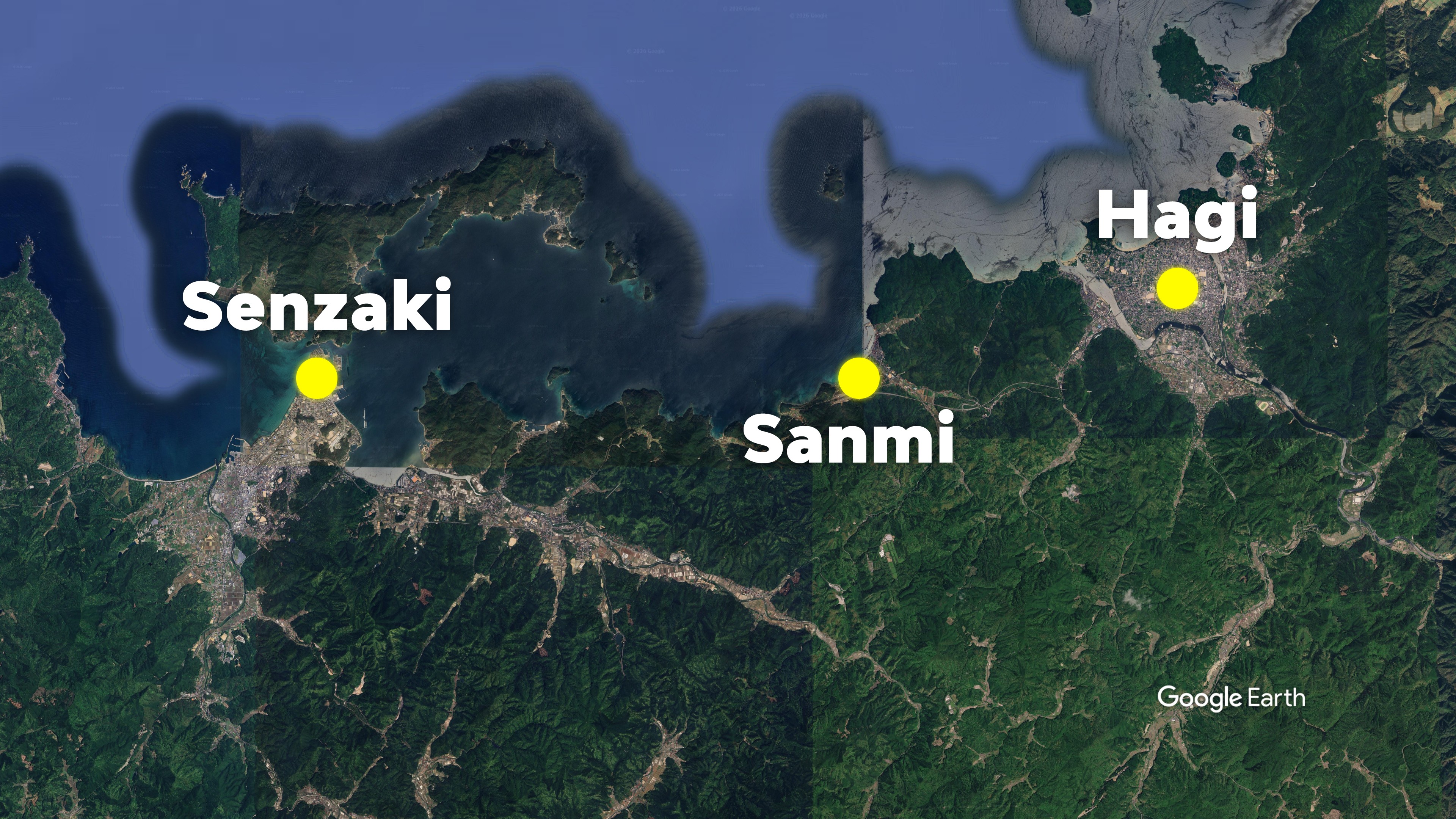
I was looking at three houses on the Yamaguchi coast recently, and they made me think about how easily we can get fixated on the asking price of an akiya.
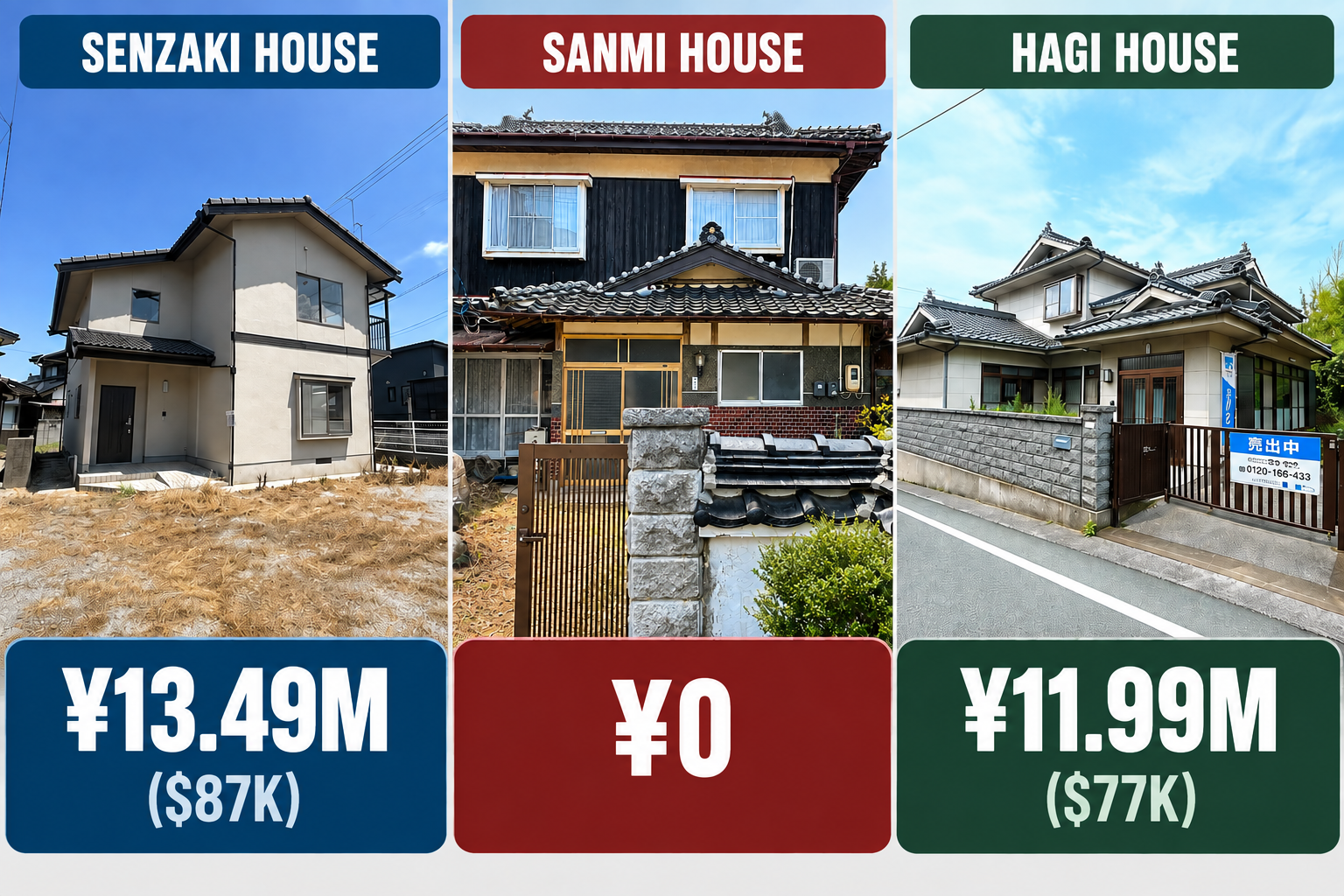
One was ¥13.49 million / $87,000 and recently renovated.
One was ¥0.
And one was ¥11.99 million / $77,000, newer, large, Japanese-style, and sitting right beside the ocean.
The interesting part wasn't which one was cheapest.
Obviously, the ¥0 house wins that contest.
The interesting part was how different those three prices felt once you actually looked at what came with each house.
¥0 is a very powerful number
I understand why people love free houses.
If you're searching for an akiya, seeing ¥0 in the price column is going to stop you. It stopped me.
And the Sanmi property had some genuinely attractive things going for it. There were two structures, around 230 m² / 2475 sqft of combined building space, roughly 516 m² / 5554 sqft of land. The station was extremely close, and you could walk to the water in about half a minute.
It wasn't simply a wreck that happened to be free.
That's what made it interesting.
But then you start looking more closely.
The buildings date back to 1974. Some parts are surprisingly usable, while other parts clearly need work. The bathroom, stairs, exterior and secondary structure all tell a different story.
At that point, you're no longer just deciding whether you can afford a house.
You're deciding whether you want to take on the project that comes with the house.
And that's a very different question.
But the ¥0 house wasn't the most interesting deal
This is something I think is easy to miss when looking at Japanese property from overseas.
The asking price is very visible.
The work required to get the property where you want it is much harder to see.
For one house, ¥13.49 million gets you a recently renovated property that is essentially ready to use.
For another, ¥0 gets you a much larger property with plenty of potential, but also a much bigger renovation challenge.
Then you see the third house at ¥11.99 million.
It was built in 2000, it's a large Japanese-style home, it's only about nine minutes from the nearest station, and the ocean is right outside.
I'm not saying the ¥11.99 million house is automatically the better deal. We don't have enough information to say that.
But after seeing the free house, I found myself looking at that ¥11.99 million price very differently.
Sometimes paying more upfront can buy you a lot less work.
That's worth remembering when you're comparing akiya.
What does a free house actually cost?
When I see a very cheap property, I'd want to know at least four things:
- What condition is it in? What can you use immediately, and what can't you?
- What work does it actually need? A coat of paint is one thing. A major renovation is something else.
- How useful is the location for the life you want? The Sanmi house is a good example of why you can't assume a low price means a bad location.
- Do you actually want the project? This one is easy to overlook.
That last question may be the most important.
There are people who love taking an old house and figuring out what to do with it. They have the time, the interest and the patience for a renovation.
There are also people who simply want a house in Japan.
Those are two different purchases, even if both properties are listed as houses.
So when you're looking at akiya, I wouldn't let a very low number do too much of the thinking for you.
A ¥0 house can be a fantastic opportunity for the right person.
A ¥12 million house can make more sense for someone else.
It depends on what you're trying to end up with.
Don't ask only what the house costs. Ask what you're going to have to do after you own it.
That's one of the things I kept thinking about after this trip.
If you're searching for property on AkiyaHub, try looking at the asking price alongside the location and surrounding context before you get too attached to the number itself.
And if you want to see the three properties that got me thinking about this in the first place, they're in this week's episode.