
Japan vs. America: These House Prices Don’t Make Sense.
Aug 30, 2026What does “old house” actually mean?
I expected the biggest difference between Fujisawa and Minneapolis to be the size of the houses.
It wasn't.
We found two houses for almost the same price. One was about $372,000 and built in 2012. The other was listed for $400,000 and built in 1911.
That stuck with me.
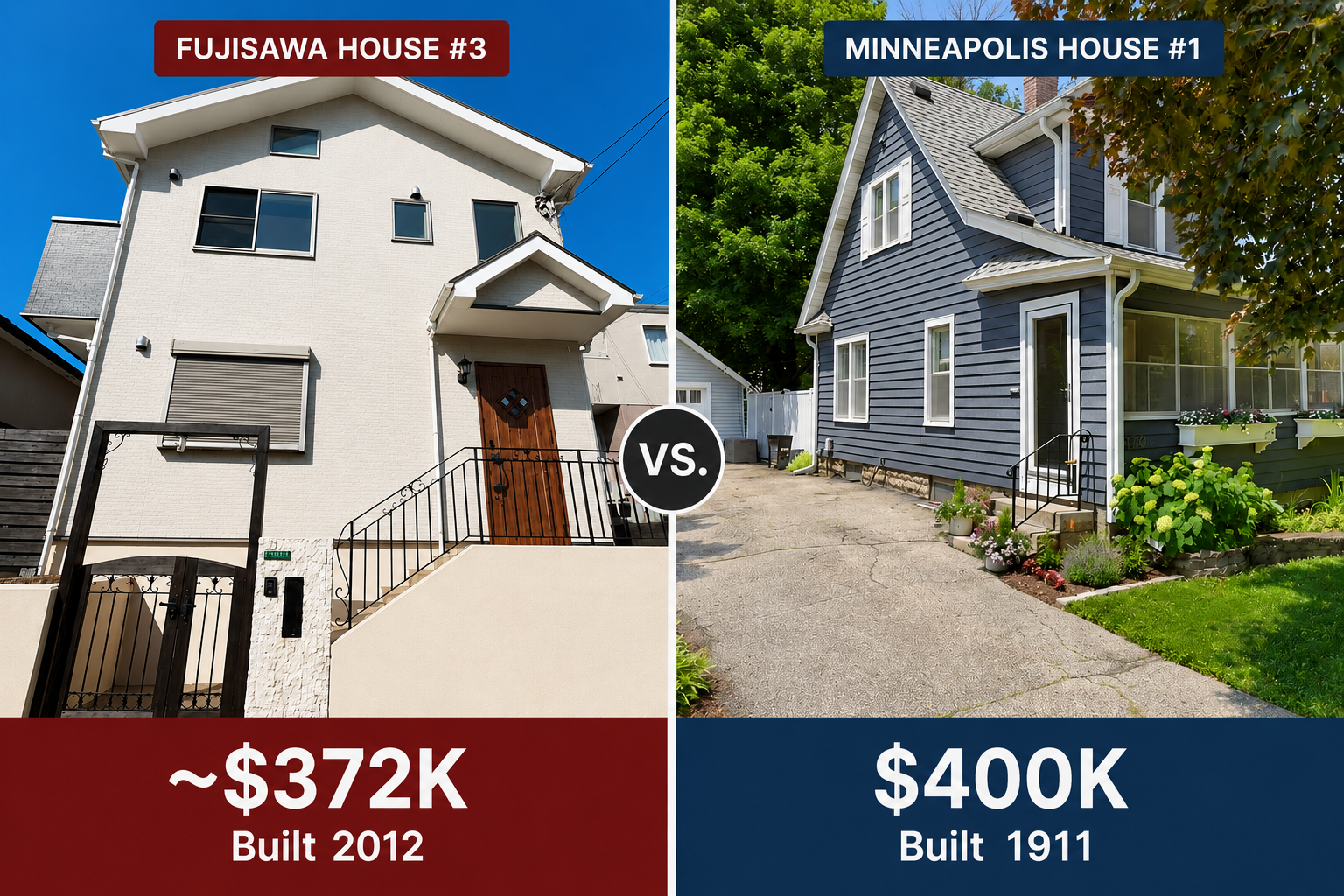
The Fujisawa house was a 4LDK, move-in ready, about an hour from Tokyo and close to Shonan. The Minneapolis house was smaller inside, with two bedrooms and one bathroom, but it came with a larger lot, a detached garage, and a basement.
You can compare all of that.
But the age difference is what made me stop and think.
What does "old" actually mean when you're buying a house?
Because apparently, it can mean very different things depending on where you are.
In Minneapolis, a house built in 1911 isn't some bizarre exception. Older homes are a normal part of the housing stock. People update the plumbing, electrical systems, kitchens, bathrooms, windows, whatever needs updating, and the house keeps being a house.
Later, we toured another Minneapolis property that pushed the point even further. It was built in 1955. More than 70 years old.
It was also listed for $1.495 million.
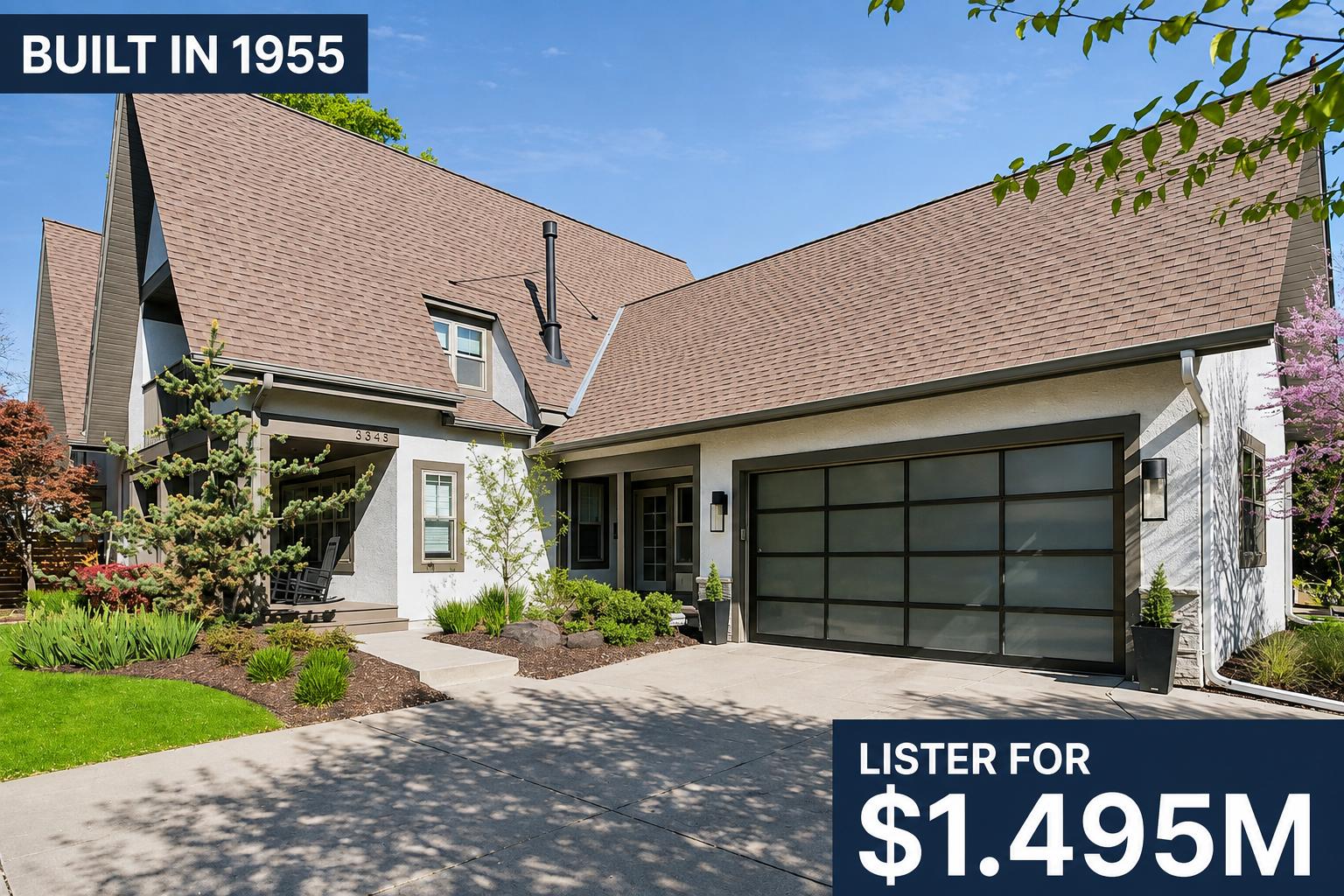
Obviously, nobody should look at that and conclude that Americans simply value old houses more. That property's price had a lot to do with Linden Hills, the corner lot, the size, and the quality of the renovation.
But that's exactly the point.
The house didn't become valuable just because it survived for 70 years.
People had continued to invest in it. The location was desirable. The property was large. The renovation was good. The market supported all of that.
A house can get old without becoming obsolete.
And the opposite is true, too. An old house isn't automatically worth saving just because old houses somewhere else are desirable.
For international buyers, I think this is one of the assumptions worth catching yourself on.
When you see a Japanese listing that says the house was built in 1975, 1985, or even 1995, you might instinctively translate that number using the housing market you came from.
That's risky.
The build year is useful information. It is not the answer.
I'd want to know:
- What condition is the house actually in?
- What has been renovated, and when?
- What hasn't been touched yet?
- How are similar houses of that age treated in this particular area?
- Is the value mainly in the building, the land, the location, or all of it?
That last question can change how you look at the entire property.
We saw that in Fujisawa, too. The roughly $372,000 house being built in 2012 makes it look like an obvious value comparison against a $400,000 house built more than a century earlier.
But "newer for the money" isn't the whole story. The Minneapolis house gives you a different lot, a different neighborhood, a garage, a basement, and a housing market where a 1911 house is still part of the normal conversation.
I don't think there's a winner here.
I just think the comparison exposed an assumption that is easy to miss.
The age of a house does not have a universal meaning.
A 70-year-old house can be a burden, a perfectly normal home, an expensive renovation project, or a premium property. You have to understand what that age means in the market where you're actually buying.
That's especially worth remembering when looking at older homes in Japan. Don't dismiss one because the number on the listing looks scary. And don't assume an old house is a bargain just because the price is low.
Look at the house. Look at what has happened to it over time. Look at where it is.
Then decide what you're actually buying.
If you want to see the two roughly $400,000 houses side by side, along with the Fujisawa and Minneapolis properties that made me think about this in the first place, watch the full episode.