
Japan’s Amalfi Coast Is Real. The Oceanview House Prices Don’t Make Sense.
Aug 09, 2026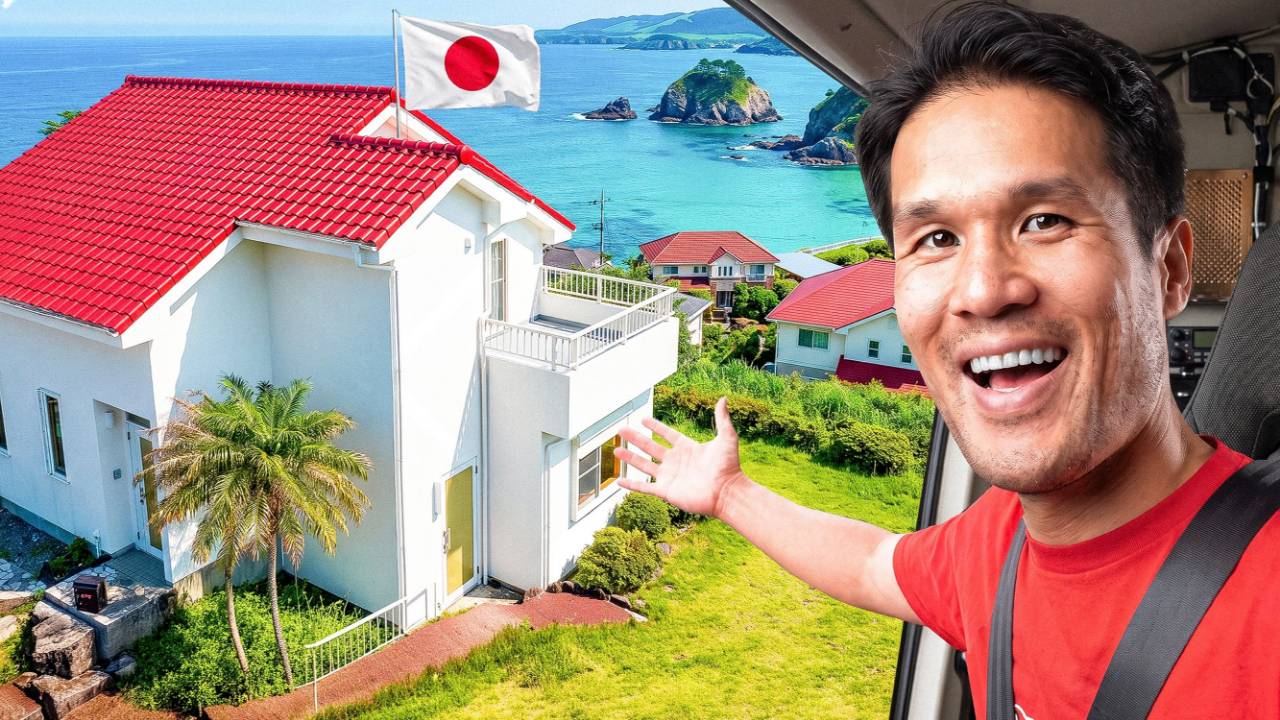
What Different Budgets Really Buy in Shimoda
One of the easiest mistakes to make when browsing Japanese real estate is treating a town as if it has a single price point.
Shimoda, on the southern tip of the Izu Peninsula, is a good example of why that doesn't work.
About three hours from Tokyo, it has clear water, sandy beaches, and the kind of scenery that feels closer to a resort than a commuter destination.
Yet the homes available there range from modest renovation projects to beachfront properties that compete with luxury coastal markets anywhere in the world.
That range changes the question buyers should be asking.
Instead of "Can I afford Shimoda?" the better question is,
Which version of Shimoda fits the way I want to use it?
A recent property hunt through the area made that contrast especially clear.
At a Glance
Property #1
• Location: Goishigahama, Shimoda
• Price: ¥32 million
• Size: 89 m² home on 312 m² of land (3LDK)
• Access: About 10 minutes by car from Izukyu-Shimoda Station
• Built: 1988
Property #2
• Location: Goishigahama, Shimoda
• Price: ¥34.8 million
• Size: 96 m² home on 496 m² of land (3LDK)
• Access: About 13 minutes by car from Izukyu-Shimoda Station
• Built: 1990
Property #3
• Location: Kakizaki, Shimoda
• Price: ¥170 million
• Size: 299 m² home on 646 m² of land (4LDK + garage)
• Access: Beachfront location in the Kakizaki area
• Built: 2009
Property #4
• Location: Yoshisami, Shimoda
• Price: ¥6.3 million (about $40,000 USD)
• Size: 86 m² home on 150 m² of land (4DK)
• Access: About 12 minutes by car from Izukyu-Shimoda Station
• Built: 1979–1980
The first stop was a 38-year-old ocean-view villa listed for ¥32 million.
It isn't extravagant, but it delivers the lifestyle many second-home buyers are actually looking for: a garden, a deck, sea views, and enough space for weekends or longer holidays.
It also comes with the practical realities of a managed villa community, including association rules and fees.
Those tradeoffs may be worthwhile if what you value most is a low-friction vacation home.
A nearby house priced at ¥34.8 million showed how small price differences don't always translate into obvious value.
It was slightly newer, larger, and felt more updated inside, yet its ocean view wasn't quite as compelling.
For some buyers, extra interior space will matter more.
For others, the view is the reason to own a coastal property in the first place.
At the opposite end of the market sat a ¥170 million beachfront home that belongs in an entirely different category.
With reinforced concrete construction, an elevator, expansive terraces, and an ocean-facing bath, it isn't simply a larger house.
It's a property designed around a premium waterfront lifestyle.
Comparing it directly to the villas misses the point because it serves a different buyer with different priorities.
The final stop shifted the conversation again.
A distressed 46-year-old house priced at just ¥6.3 million showed that affordable entry points still exist, even in a desirable beach town.
It wasn't presented as a bargain waiting to happen.
It needs significant work, and the interior couldn't be toured.
Even so, listings like this remind buyers that low prices usually reflect condition, uncertainty, or renovation costs rather than hidden opportunities.
If you'd like to see all four properties, compare the tradeoffs between them, and decide which one you would choose, the full episode takes you through each stop on Shu's spontaneous Shimoda property hunt.
From realistic ocean-view vacation villas to a spectacular beachfront home and an older renovation project, it shows how different budgets can lead to completely different lifestyles in the same town.
Watch the video here – Japan’s Amalfi Coast Is Real. The Oceanview House Prices Don’t Make Sense.
Shimoda is a useful reminder that every market contains multiple buyer paths.
If you'd like to explore how to find opportunities like these for yourself, these guides are a great place to continue:
• Learn how to find livable akiya listings across Japan, understand the different types of properties available, and recognize the warning signs that separate good opportunities from costly mistakes – Japan Akiya Listings: Properties You Would Actually Want to Buy
• Discover how to explore Japanese homes using AkiyaHub's Map Search, compare prices across regions, and build a shortlist that matches your budget and goals – How to Find Your Dream Property in Japan
The lesson isn't that one property is objectively better than another.
It's that Shimoda contains several different markets operating side by side.
A weekend homeowner, a luxury buyer, an investor, and someone willing to renovate could all shop in the same town and leave with completely different conclusions.
That's worth keeping in mind whenever you research real estate in Japan.
Looking at average prices rarely tells the whole story.
Understanding how a market is segmented by lifestyle, condition, and intended use is often far more useful than knowing its median listing price.