Tokyo’s Banff Is Real. The House Prices Don’t Make Sense.
Oct 04, 2026You're Not Buying the Same House for Less
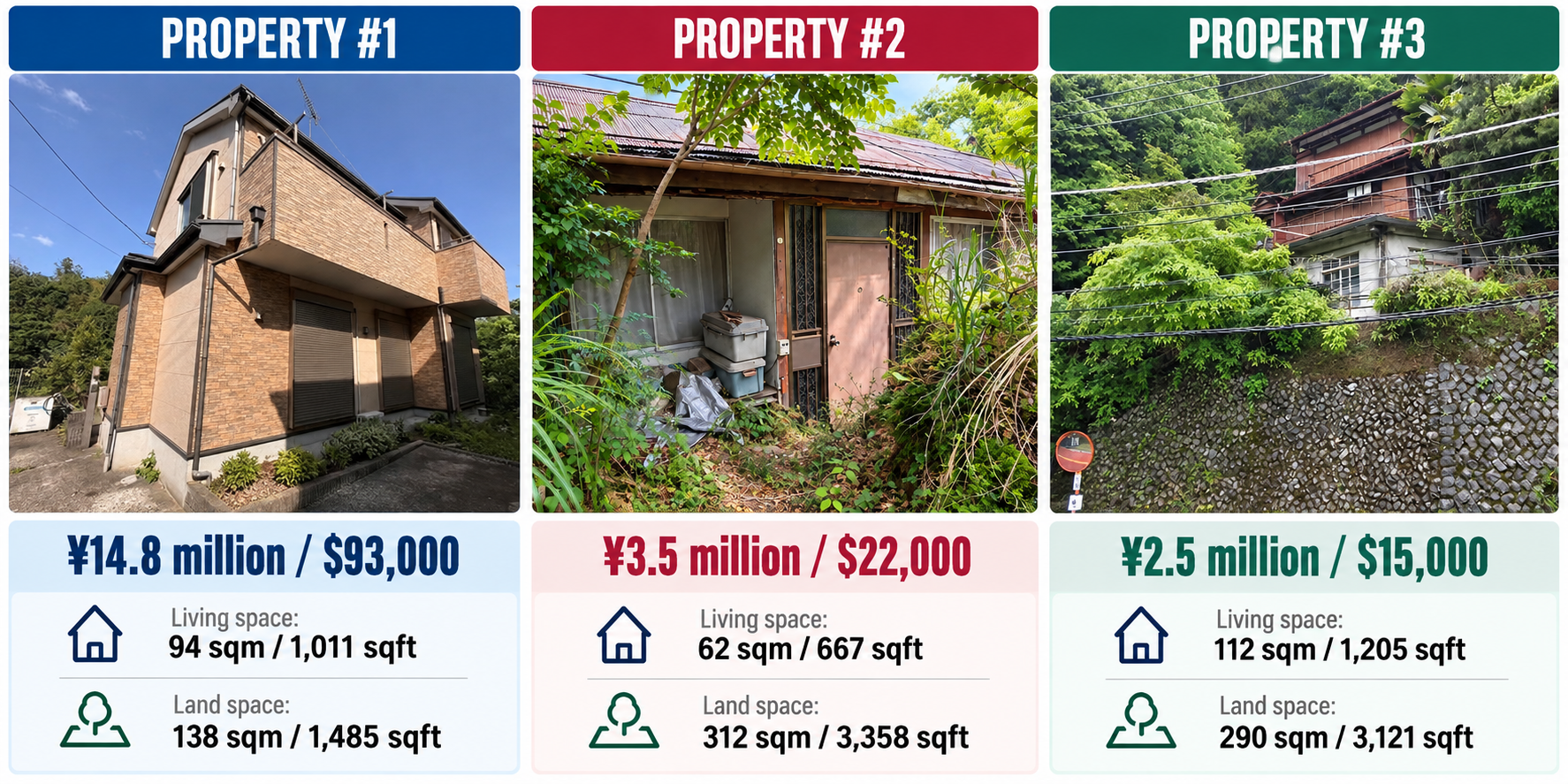
If I showed you three houses in western Tokyo priced at ¥14.8 million / $94,000, ¥3.5 million / $22,000, and ¥2.5 million / $15,000, which one would you choose?
I think most people would look at the prices first.
After visiting all three, I'm not sure that's the first thing I'd compare.
The interesting part isn't simply that the houses get cheaper. It's what changes when the price changes.
The ¥14.8M / $94,000 house in Ome City is a relatively straightforward proposition. It was built in 2008, has a 4LDK layout, sits near the river, and needs some refresh work. You can walk through it, understand the layout, look out at the water, and imagine how you'd use it.
Then the price drops to ¥3.5M / $22,000.
Now we're looking at a single-storey house with 312 sqm of land and 62 sqm of building space. But major repairs are needed, the buyer needs to pay for sewer-connection work before moving in, and the local Akiya Bank process means you can't simply treat it like an ordinary property viewing.
That's a very different purchase.
Then we go down to ¥2.5M / $15,000.
This house is farther out toward the lake, the approach is steep, and the building dates back to 1964. The listing reports that it has been vacant for 18 years. It's a completely different setting from the first house.
And yet, I wouldn't automatically say it's a worse option.
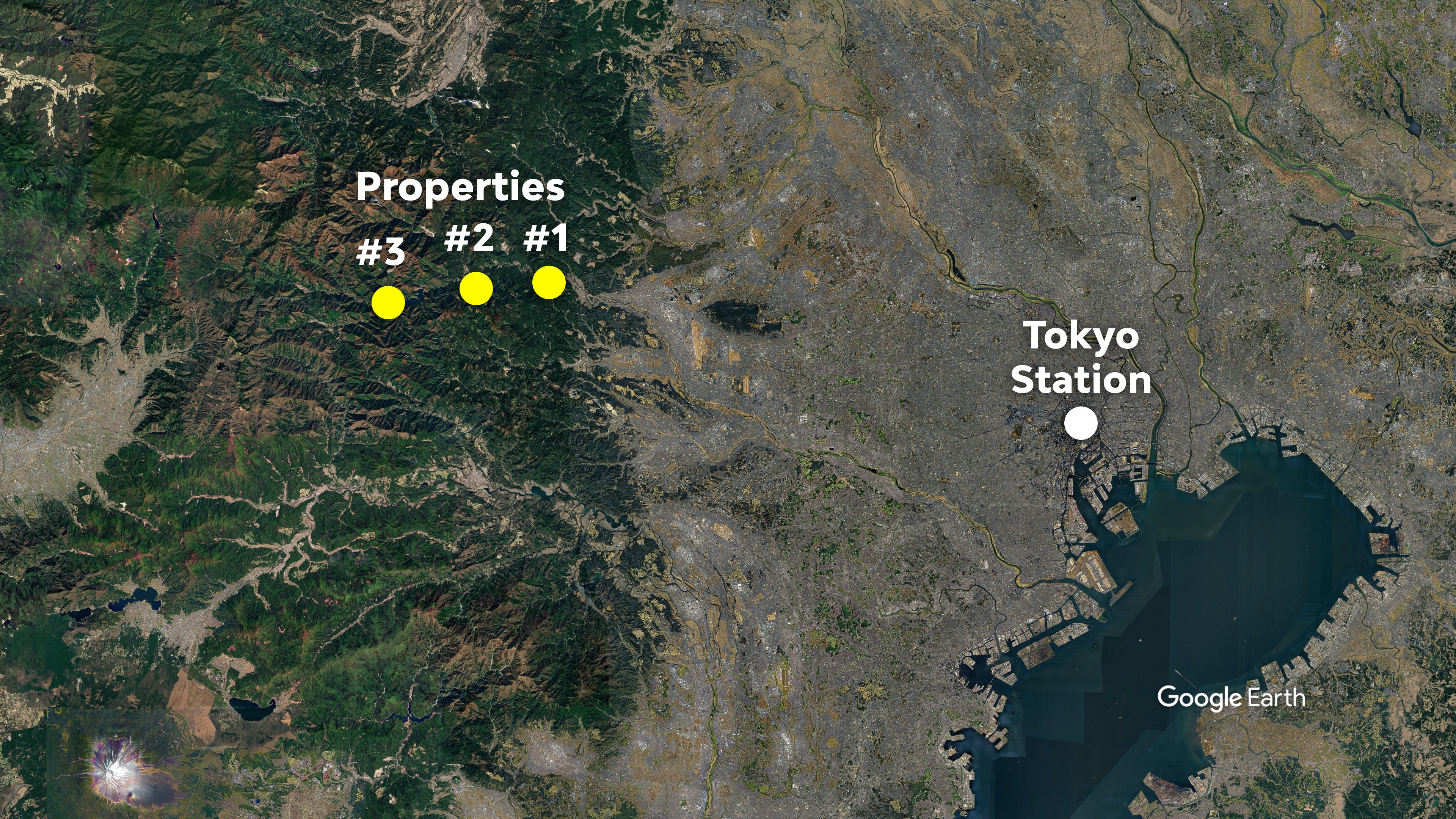
For the right person, being farther from the station and closer to the mountains and lake might actually be part of the appeal.
You're not buying the same house for less.
You're making a different decision
That's something I think is easy to miss when you're browsing Japanese property listings online. Price is one of the easiest things to compare. You can put ¥14.8M next to ¥3.5M and immediately see the difference.
It's much harder to compare everything that comes with those numbers.
How much work does the house need?
How easy is it to reach?
How much land are you getting?
What is the surrounding environment like?
And, probably most importantly, what do you actually want to do with the property?
If you're looking for a relatively conventional second home where you can spend weekends by the river, the first house may make more sense to you.
If you're looking for land and don't mind taking on a much bigger project, the second property is a different proposition.
And if what you really want is a more remote setting near the lake, you may look at the third house differently again.
That's why I don't think the right question is simply, "How cheap is this house?"
I'd ask:
What am I getting, and what am I taking on?
That doesn't mean cheap houses are bad
It doesn't mean the ¥14.8M house is automatically the better choice.
It means the asking price isn't enough information to make that decision.
I've found this is especially important when you're looking at properties from overseas. A listing can make a ¥2.5M house look incredibly cheap on a screen. But you need to understand what that ¥2.5M actually represents before you can decide whether it's interesting to you.
And sometimes the answer may be yes.
That's the part I liked about looking at these three houses together. There wasn't really a winner. There were three different versions of what owning a home in this part of Tokyo could look like.
If you're looking at Japanese properties yourself, I'd start with the kind of life you want from the house, then work backward from there. The price matters. So do the things that come attached to it.
We filmed the whole trip for EP313, including all three properties and the river and lake around them. If you want to see what these different price points actually look like, you can watch the full episode here:
[WATCH Ep. 313: Okutama Special]
And if you're ready to start comparing properties for yourself, take a look at AkiyaHub's property search and start with the locations, budgets, and level of work that actually fit you.