
$12,000 vs $12,000,000 House in Tokyo, Japan!
Nov 01, 2026Why a ¥200M house isn't ten times better
One house in Kisarazu cost ¥19 million / $121,000, including renovation, while another house in Seijo, Tokyo, is asking ¥200 million / $1.2 million
The first has 91 sqm of interior space and almost 200 sqm of land. The second has 105 sqm of interior space.
That's a price difference of more than ten times, for just 14 additional square metres inside.
So what are you paying for?
A lot of the time, the answer has less to do with the size of the house than you might expect.
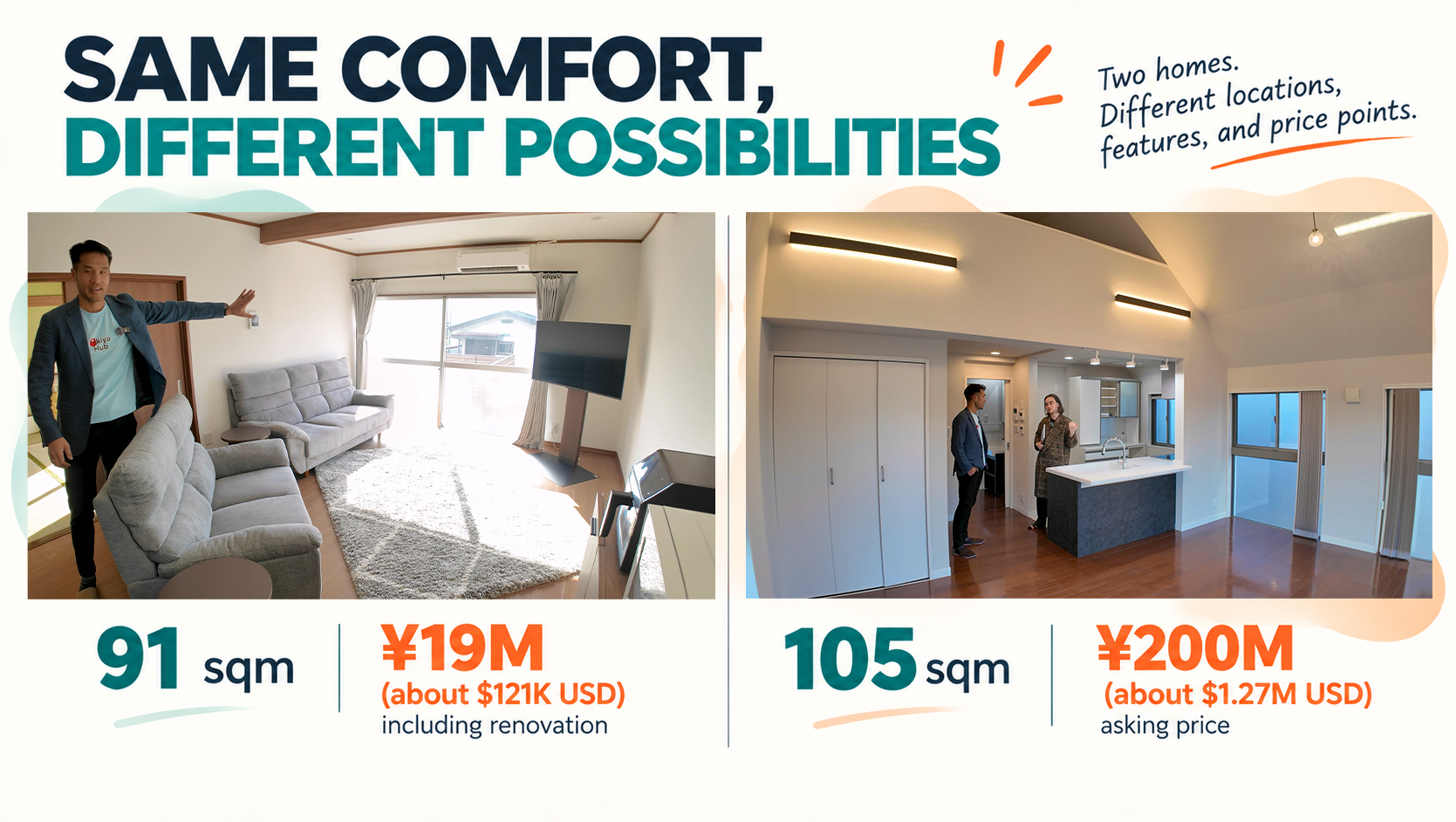
The same amount of space can offer a very different life
The Kisarazu house is a good example of what a substantial renovation can deliver. Built in 1976, it has been updated into a usable family home, with the living, dining, and kitchen areas opened up into one larger space. It also comes with almost 200 sqm of land.
The ¥19 million figure includes the original ¥15 million purchase and another ¥4 million in renovation work. It's the total for the purchase and that additional work, not the original asking price.
For someone who wants a house with room to live, some land, and a more relaxed setting outside central Tokyo, that's a particular kind of proposition.
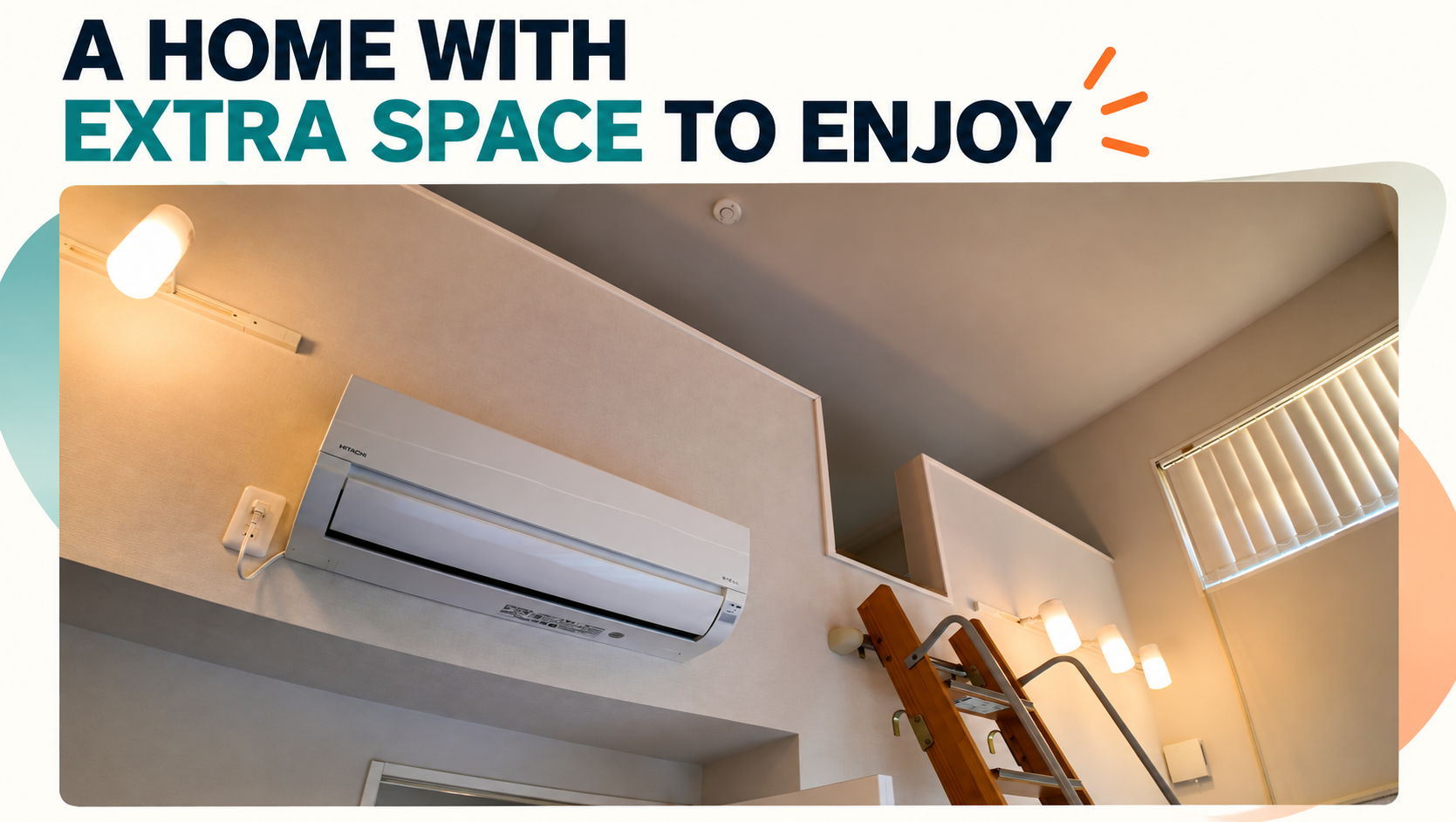
The Seijo house offers something different. Built in 2009, it has better insulation, double windows, high ceilings, a large loft, and even a private elevator.
When I visited, I noticed the difference in comfort. The floor didn't feel cold underfoot, and the house felt more substantial in the way it was built.
But the location is a big part of the story, too. Seijo is a premium residential area in western Tokyo. As Alex pointed out during our visit, you're paying a lot for the area itself.
The two houses aren't interchangeable. They have different amounts of land, different construction, and very different locations.
And the Seijo house is asking ¥200 million. That's an asking price, not a confirmed sale price.
What does the extra money actually buy?
I think people naturally start by comparing price and floor area when looking at property. Both are easy to understand, and you can put them side by side in a spreadsheet.
But the numbers don't tell you how the house feels, how the space works, or whether you want to live in that particular neighbourhood.
Fourteen extra square metres is easy to measure. The value of a better location, more comfortable construction, or a private elevator is harder to put a number on.
That doesn't mean the more expensive house is automatically worth the difference. It means you need to decide which of those advantages you actually want.
If you're looking for land and a practical family home, the Kisarazu property might make more sense for your plans. If living in Seijo is the point, then comparing the two houses by floor area alone misses much of what you're paying for.
Neither preference is wrong. They're different choices.
The useful question is what the extra money buys you, and whether you care about those particular things.
The cheapest house has the same problem in reverse
We also looked at a house in Koto, Tokyo, asking just ¥2 million.
At around 30 sqm, it was already much smaller than the Kisarazu house. But size wasn't its only limitation. The building was severely distorted, and the property information described the plot as non-rebuildable because of its narrow access.
That ¥2 million price tells you what the seller is asking. It doesn't tell you what the property can realistically provide for your intended use.
The same principle applies at the other end of the scale. A price is a starting point for understanding a property, not a complete explanation of it.
Before comparing prices, decide what you're comparing
At the top of our price range was a 161 sqm apartment at Mita Garden Hills in central Tokyo, listed at ¥1.98 billion at the time of filming.
Here, the experience extends beyond the apartment itself. The development was completed in 2024 and includes concierge service and extensive shared facilities. You're buying into a different kind of residential environment altogether.
You don't need to be shopping at that price level for the comparison to be useful.
When you look at two properties in Japan, try asking yourself: What does this one offer that the other doesn't?
It might be land, a better layout, newer construction, a particular neighbourhood, or the shared facilities of a larger development. Then ask whether that difference matters for the way you intend to use the property.
That's a much better starting point than deciding that the cheaper house must be the bargain, or that the more expensive one must be better.
If you'd like to see how dramatically properties change across different price ranges, you can watch our latest video below.