Japan’s San Diego is Real. A New House Costs Just $190K.
Nov 04, 2026What are you really looking for in a home in Japan?
When you compare Japanese houses, it's easy to start with the numbers
Price, floor area, number of rooms, age of the building. These are useful, and they help narrow down a search. But they don't necessarily tell you which house you'd actually want to live in.
I was thinking about this while looking at three very different properties in Yokosuka, just south of Yokohama.
One was a renovated family home with traditional Japanese features. Another was a newly built house that had never been lived in. The third had an ocean view that made the location feel like part of the house itself.
All three were interesting. For very different reasons.
The question isn't simply which house gives you the most for your money. It's what you want that money to give you.
Three houses, three different choices
The first house, in Highland, was built in 1985 and had been renovated. It had four bedrooms, a living and dining area, a garden, parking, and traditional Japanese touches such as tatami rooms and an engawa.
The asking price was ¥19.9 million / $125,000.
For someone looking for a practical family home with some Japanese character, that combination might be appealing. You can imagine how the house would work day to day without needing to imagine a completely different building.
The second house, in Nishi-Uraga, offered something else. Completed in 2025 and never lived in, it had a more modern, three-story layout, parking, and a location near Uraga Bay. The asking price was ¥29.89 million / $189,000.
The land was more compact, and the house used its vertical space differently. Someone who values newer construction and a modern interior might find that a better fit than the first property.
Then came the house in Nagasawa, asking ¥39.8 million / $251,000.
When we opened the door to the second-floor living room, the ocean was right there. You could hear the waves. The upper panoramic space, with its deck and jacuzzi, offered an even wider view.
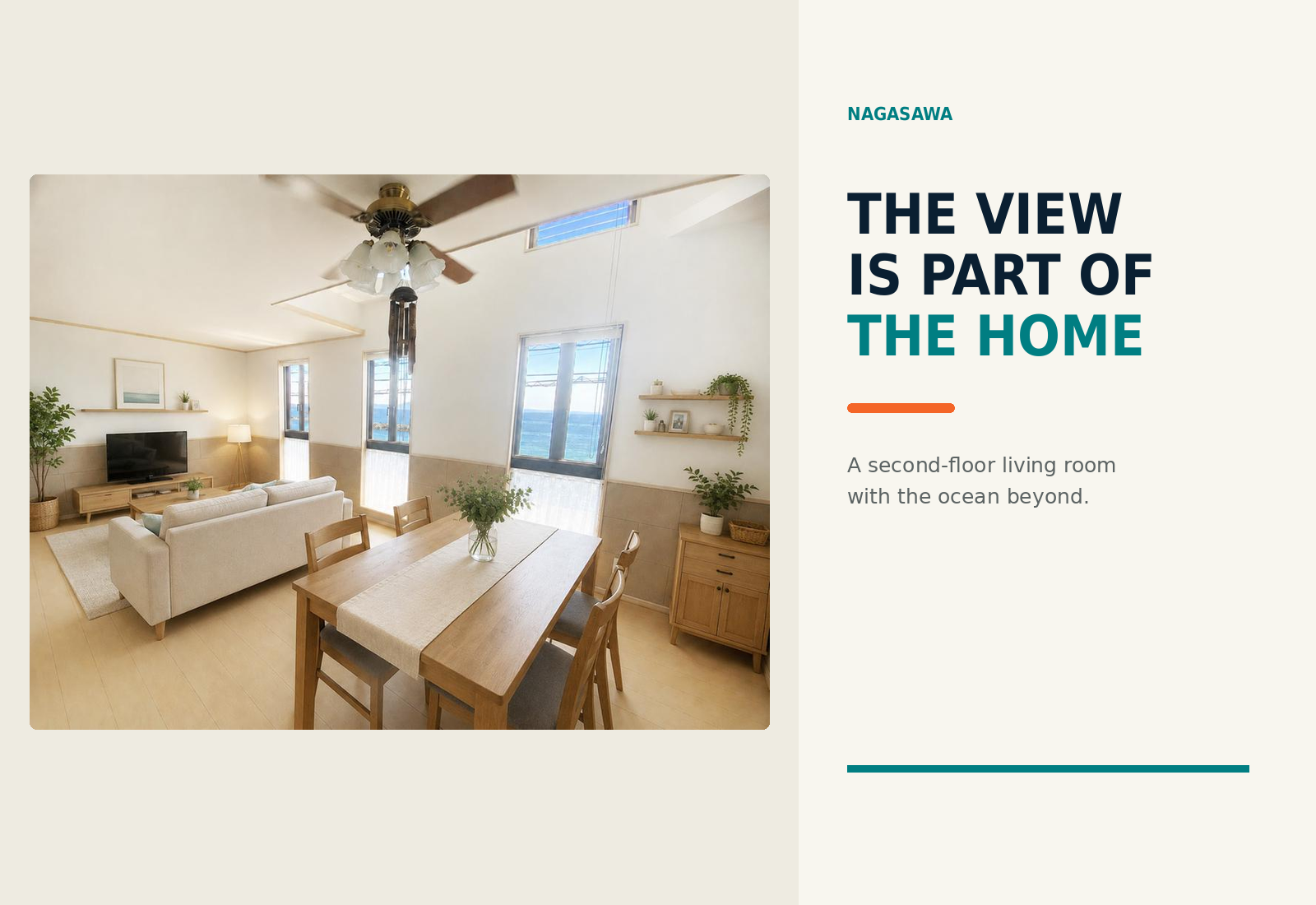
This house made the location impossible to ignore.
It would be easy to treat these three properties as a price ladder, with the most expensive one at the top. But they aren't three versions of the same product. The prices rise, and so do the differences in the buildings and their surroundings. There's no simple way to rank them without knowing what the buyer actually wants.
What do you want outside your front door?
This is one reason I think it's worth looking beyond the house itself when searching for property in Japan.
A garden might be a major part of how you want to use your home. A flat walk to the station might matter more than an extra room. Maybe you want to be near the water, or you prefer a residential neighborhood where daily life feels a little removed from the city.
These preferences can lead you toward very different places, even within the same city.
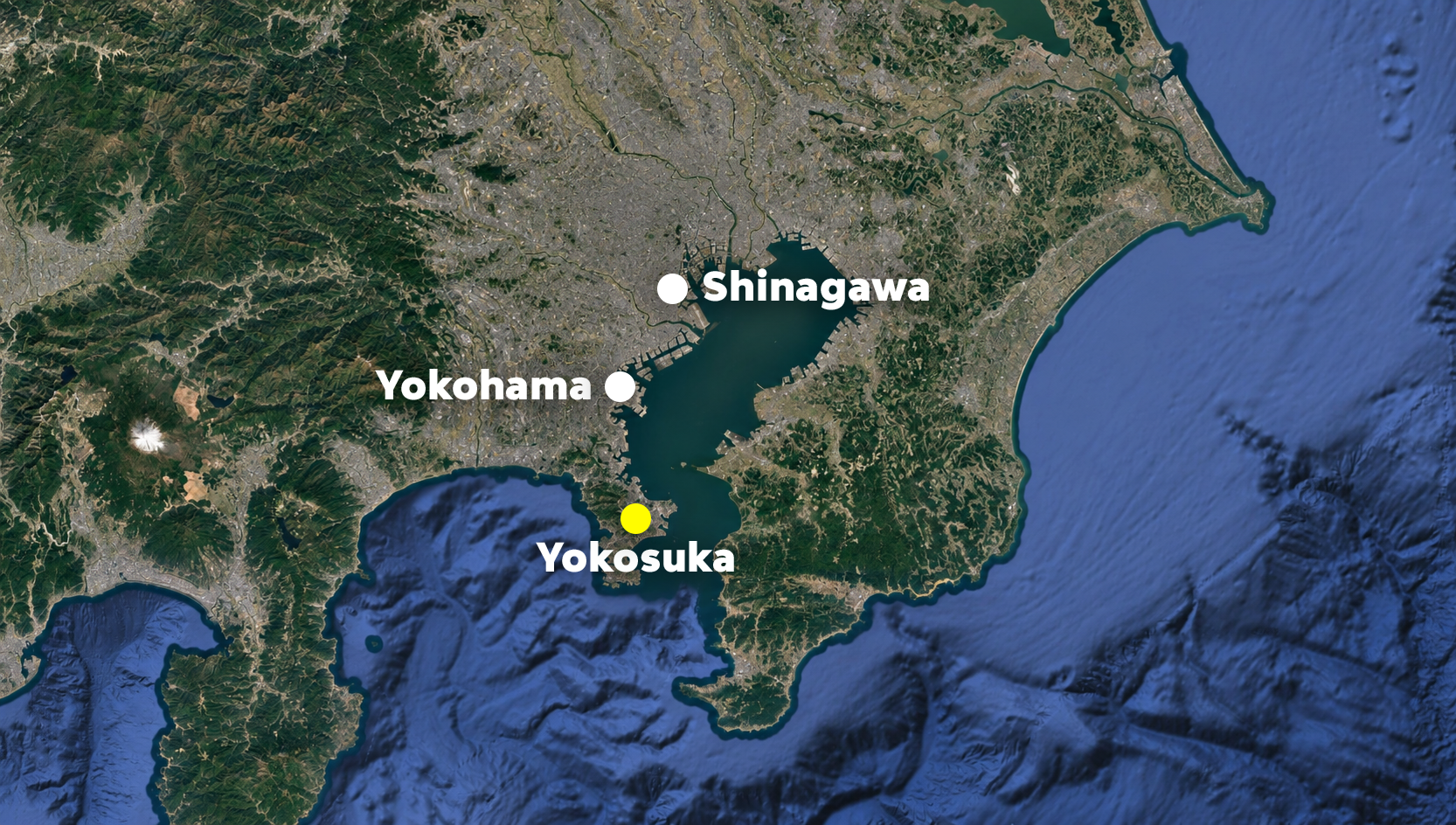
Yokosuka is an interesting example because it combines a coastal setting with rail connections to Greater Tokyo. Local guide Yamada-san described journeys of roughly 30–40 minutes to Yokohama and around an hour to Shinagawa by train. The city also has its own bays, waterfront neighborhoods, and very different residential environments.
That doesn't mean every property has the same level of convenience. The three houses themselves had different relationships with their nearest stations. You still need to look at the specific location, rather than assuming that a citywide transport connection tells you everything.
But if you've been searching around Tokyo simply because that's the part of Japan you know best, it's worth asking whether you really need to live there.
You might discover that another location suits you better.
A question I would ask before getting attached to a listing
When you find a house you like, try separating what appeals to you about the building from what appeals to you about its surroundings.
Ask yourself two things:
- What do I want the house to do for me? Think about the space, layout, condition, and features you'll actually use.
- What do I want the location to give me? Consider your surroundings, transport needs, access to the places you care about, and the kind of everyday experience you're looking for.
Then look at the tradeoffs.
Perhaps a newer house appeals to you, but you'd rather have more land. Maybe the ocean view is wonderful, but you wouldn't pay extra for it if you rarely used the outdoor space. Or perhaps being close to the water is precisely why you're looking for a home in Japan in the first place.
There's no universal right answer. The point is to work out what matters to you before a particular property starts making that decision on your behalf.
That's what interested me about Yokosuka. I went looking at houses, but the further we got into the day, the more the place around each house became part of the comparison.
Yokosuka is worth exploring beyond the properties themselves. The coastal setting and connections to Tokyo are part of the appeal, but the hills, transport options, and differences between neighborhoods can have a real impact on how you use a home there.
Our Local Area Guide to Yokosuka offers a closer look at the city's neighborhoods, transport connections, and practical considerations for buyers.
If you're looking for a home in Japan, it's worth giving the location as much thought as the building. You might find the right house somewhere you hadn't considered.
If you'd like to see what I mean, you can watch our latest video below.
[WATCH THE VIDEO: Yokosuka Special]